Emerging New Voices in Global Health

For decades, the narrative of global health was written primarily in the boardrooms of Geneva, Washington D.C., and London. It was a top-down approach where solutions were designed in the Global North and exported to the Global South. However, as we navigate through 2026, a profound transformation is taking place. A new generation of leaders, researchers, and community advocates—collectively known as the “New Voices in Global Health”—is reclaiming the narrative. These voices are challenging traditional power structures, prioritizing local expertise, and redefining what it means to achieve health equity on a planetary scale.

The rise of these new voices represents a shift from “charity-based” global health to “solidarity-based” global health. It is a movement that values lived experience as much as academic credentials and recognizes that the most sustainable health solutions are those born within the communities they serve.

Decolonizing the Global Health Agenda

At the heart of the New … Read more
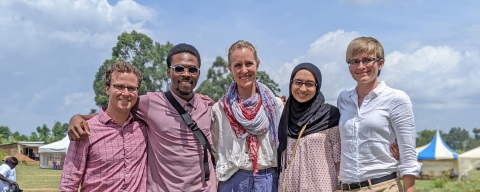
The Critical Importance of Global Health: Challenges and Innovations

Global health, a discipline focused on improving health and achieving equity in health for all people worldwide, plays an increasingly pivotal role in our interconnected world. The rise of global pandemics, environmental changes, and socioeconomic disparities underscore the necessity of international cooperation and robust health systems. Understanding the complexities and opportunities within global health is essential for fostering a healthier, more resilient global population.

The Challenges in Global Health

1. Infectious Diseases: Persistent Threats

Infectious diseases remain one of the most formidable challenges in global health. Despite advancements in medicine and technology, diseases such as malaria, tuberculosis, and HIV/AIDS continue to afflict millions, particularly in low- and middle-income countries. The emergence of new pathogens, such as the novel coronavirus (COVID-19), has further highlighted the vulnerabilities in global health systems.

These diseases often spread rapidly across borders, making them a global concern rather than a localized issue. The interconnectedness of our … Read more

Understanding PPD (Paranoid Personality Disorder)


What is paranoid personality disorder?

Paranoid personality disorder is classed as a Cluster A personality disorder, which is defined as having odd or eccentric thoughts and behaviours. 

PPD is a serious and debilitating mental health condition, usually starting in early adulthood.  It’s generally more common in men than women and is believed to affect between one to four percent of the population.  About 75% of people with PPD will also suffer from another personality disorder, most commonly antisocial, avoidant or borderline personality disorder. 

It is characterised by feelings of deep mistrust, suspicion and paranoia, unlike other mental health conditions involving paranoia they do not suffer from hallucinations or delusions.  Because of their symptoms it can be very difficult for people with PPD to make and maintain relationships. 

It can affect their school or work lives, due to their mistrust and suspicion of other people.  It is often more upsetting

Read more